
How Long After Closing Do Loan Officers Get Paid?

Your First Commission Starts With Licensing
Every paycheck in this career traces back to the same 20 hour course.
Quick Answer:
- Commission is usually paid after a loan closes and funds, on your company's next scheduled commission payroll, which often means a few days to a few weeks after closing.
- The bigger wait is the pipeline: a loan has to move from application through underwriting to closing before it pays you, and that often takes several weeks.
- Your written compensation plan sets the exact schedule, including payroll cutoffs and whether you receive a base wage or a draw while your pipeline builds.
When Do Loan Officers Get Paid After Closing?
No federal rule sets the day a loan officer's commission is paid. Your employer's compensation plan does. Most plans follow the same basic pattern.
- The loan closes. The borrower signs the final documents.
- The loan funds. The lender sends the money. On many loans this happens at or shortly after closing, and many plans treat funding, not signing, as the trigger.
- Payroll cutoff passes. Loans that fund before the cutoff go into that pay period's commission run. Loans that fund after it wait for the next one.
- You get paid. Commission arrives on the scheduled commission payday, often on a twice monthly or monthly cycle.
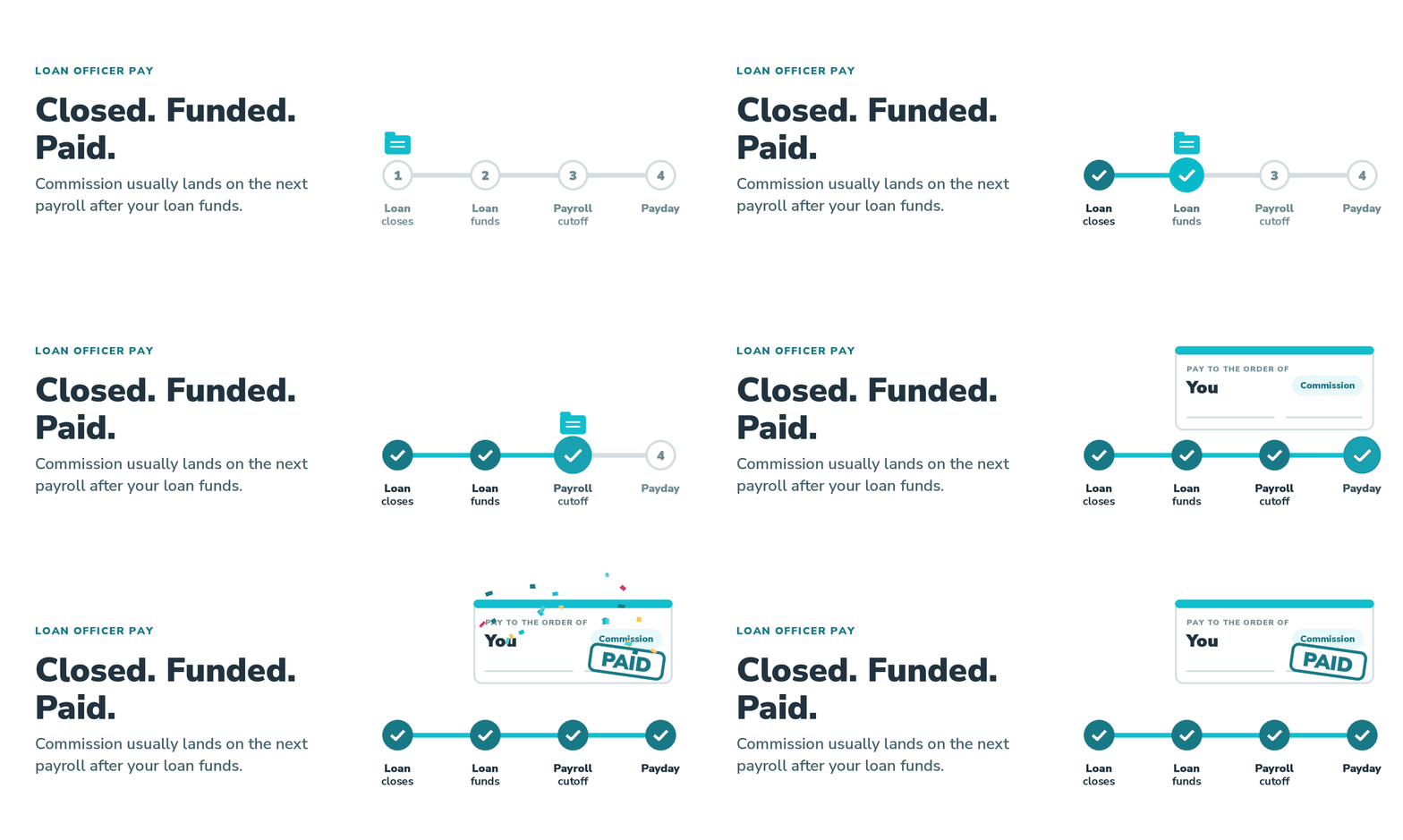
So a loan that funds the day before a cutoff can pay within days, and one that funds the day after can take a few weeks. Ask any employer to walk you through its cutoff dates before you sign.
Why Does Your First Commission Take a While?
New loan officers usually feel the delay most at the start, because several waits stack up before the first check.
- Getting licensed and sponsored. You need your license active with a sponsoring company before you can originate.
- Building a pipeline. Your first applications come from the referral partners and leads you develop. Here is how new loan officers get their leadsPre License How Do Mortgage Loan Originators Get Leads Resources.
- Processing and underwriting. Each file moves through documentation, appraisal, conditions and approval. A strong processor relationshipPre License What Does A Loan Processor Do And How Do Mlos Work With Them Resources keeps that moving.
- Closing, funding and payroll. Then the steps above.
Put together, your first commission often lands a couple of months or more after you start originating. Plan for that gap before you make the switch.
How Is Your Commission Calculated?
Federal rules shape what your pay can be based on. Under the CFPB's loan originator ruleRegulations 1026 36 Rules Policy, a creditor cannot base your compensation on loan terms like the interest rate, but it can pay you a fixed percentage of the loan amount. You also cannot be paid by both the borrower and another party on the same loan. For splits, basis points and what a full year can look like, see our commission guidePre License What Does Mortgage Loan Officer Commission Actually Look Like Resources.
What Is a Draw Against Commission?
A draw is an advance your employer pays each pay period that is later subtracted from the commissions you earn. It smooths out the gaps between closings.
- Recoverable draw: if your commissions come in lower than your draw, the shortfall carries forward and comes out of future commissions.
- Nonrecoverable draw: the advance is yours to keep even if commissions fall short, though plans often limit how long it lasts.
- Base plus commission: some employers, especially banks and credit unions, pay a base wage with a smaller commission on top.
The Department of Labor has said that loan officers whose main job is sales generally do not fit the administrative exemption from minimum wage and overtime rules. Many employers pay a base wage or draw each pay period even on commission heavy plans, so ask exactly how yours works.
Choose a State and Course
Plan Your First Year's Paychecks
Use real earnings data to budget the gap before commissions start.

What Can Delay a Loan Officer's Commission?
- A loan that is delayed, restructured or never closes.
- Funding that lands just after the payroll cutoff.
- Missing documents or conditions that hold up funding.
- Plan terms such as clawbacks if a loan pays off early, which some plans include.
How Should You Plan for Your First Few Months?
Treat your first commission as a milestone, not a paycheck you can count on by a certain date. Many new loan officers keep income from another job while they get licensed, and they choose employers with a base wage or draw for the first stretch. Our look at income potential helps you set realistic expectations, and these career options show where a mortgage license can take you.
Frequently Asked Questions
Do loan officers get paid at closing?
Usually not on the same day. Most compensation plans pay commission after the loan funds, on the next scheduled commission payroll.
Can a loan officer be paid by both the borrower and the lender?
No. Federal rules bar a loan originator from receiving compensation from both the consumer and another party on the same transaction.
What is a draw for a loan officer?
A draw is an advance paid each pay period that is later deducted from earned commissions. With a recoverable draw, any shortfall comes out of future commissions.
Start the Clock on Your First Commission
Every loan officer's first check starts with the same step: getting licensed. Start your 20 hour course, learn the rules that shape your pay, and walk into your first job interview knowing exactly what to ask about.
The Clock Starts at Enrollment
Your first commission is a few steps away, and step one takes 20 hours.