
How to Become a Mortgage Loan Originator in Florida (2026 Edition)
Florida is the only state where you can close a loan in flip-flops. Probably.
Aceable Mortgage's bundle gets you to that closing table. Footwear is your call.
Quick Answer
- Who licenses you: The Florida Office of Financial Regulation (OFR) issues loan originator licenses, and every filing runs through NMLS.
- What you need: 20 hours of NMLS-approved education (including 2 hours of Florida law), a score of 75% or better on the SAFE MLO Test, FBI and Florida fingerprints, a credit report, and an approved MU4 application.
- How long it takes: About 4 to 6 weeks at the fastest and 8 to 12 weeks for most people, and your license goes active once a Florida-licensed mortgage company sponsors you.
To get a mortgage loan originator (MLO) license in Florida, you complete 20 hours of approved education, pass the national SAFE MLO Test (delivered by Prometric), clear two background checks, and apply to the Florida Office of Financial Regulation through NMLS. Once OFR approves you and a licensed Florida mortgage company sponsors you, you can start originating loans.
Here is every step in order, plus the Florida-specific details that trip people up.
Who Licenses Mortgage Loan Originators in Florida?
The Florida Office of Financial Regulation. OFR's Division of Consumer Finance licenses loan originatorsDivisions Offices Division Of Consumer Finance Loan Originator Flofr.gov under Chapter 494 of the Florida Statutes, and all applications, amendments, and renewals are filed through the Nationwide Multistate Licensing System (NMLS).
Bank MLOs take a different path. If you will work for a bank or credit union, you will typically register through NMLS as a federally registered MLO instead. This guide covers the state license, which is the path for mortgage brokers, independent lenders, and most career changers.
What Are the Requirements for a Florida MLO License?
- Age and education: Be at least 18 and hold a high school diplomaStatutes 2025 0494.00312 Laws or its equivalent. No college degree is required.
- Pre-licensing education: 20 hours of NMLS-approved education, including at least 2 hours on Florida law.
- SAFE MLO Test: A passing score of 75% or higher.
- Fingerprints: One set through NMLS for the FBI check, plus a separate set through a live scan vendor approved by the Florida Department of Law Enforcement (FDLE).
- Credit report: Authorization for NMLS to pull an independent credit report.
- Application: A completed MU4 filed through NMLS with the required fees.
- Sponsorship: A Florida-licensed mortgage broker or lender to sponsor your license so it can go active.
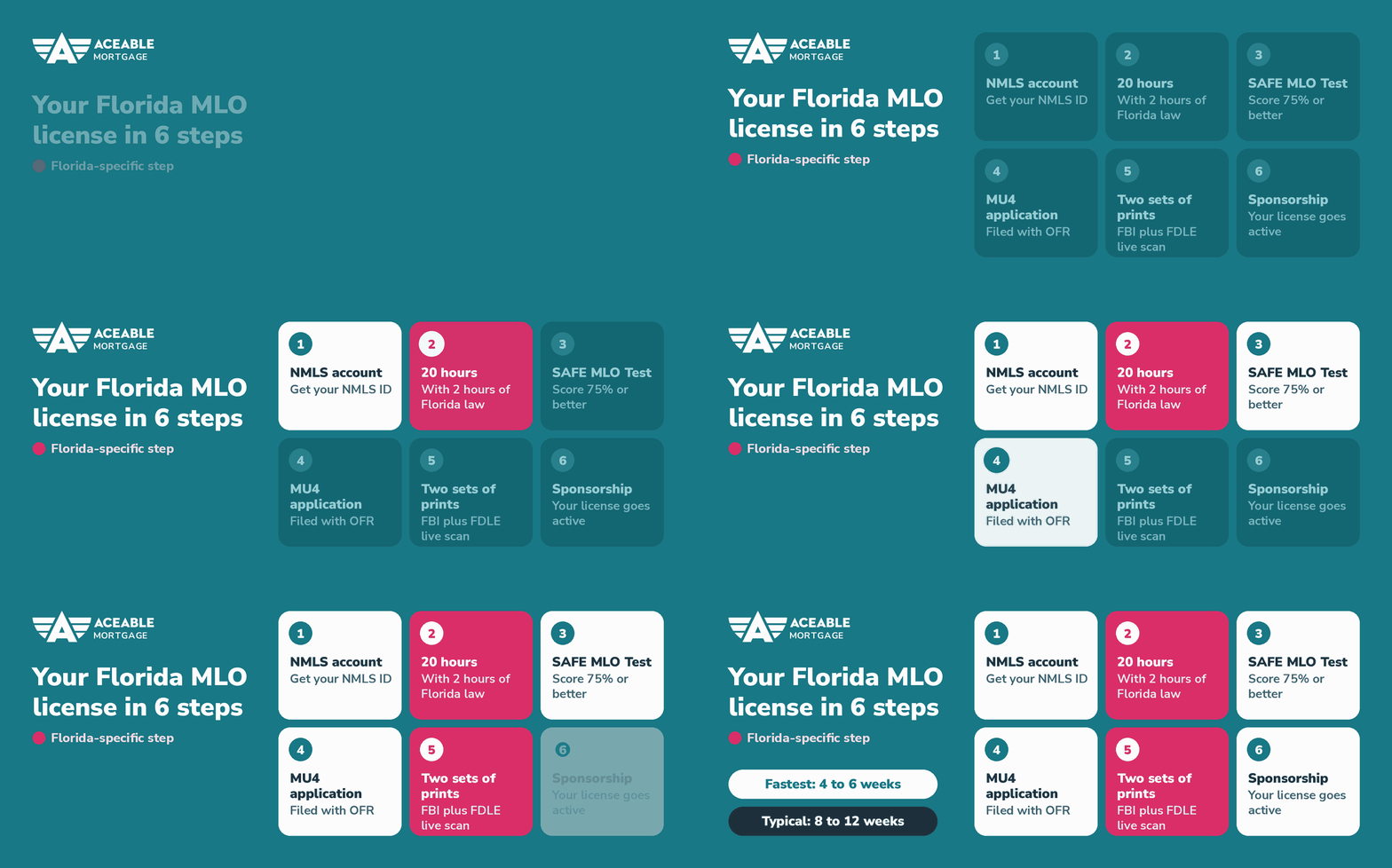
How Do You Get Your Florida Mortgage License, Step by Step?
- Create your NMLS account. You receive the NMLS ID that follows you through your mortgage career.
- Complete 20 hours of education. Include the 2 required hours of Florida law.
- Pass the SAFE MLO Test. Score 75% or better on the national test.
- File your MU4 in NMLS. Your application goes to OFR for review.
- Clear both background checks. Submit FBI and Florida fingerprints and authorize your credit report.
- Get sponsored. A Florida-licensed mortgage company activates your license through NMLS.
Step 2: What Does Florida's 20-Hour Course Cover?
The federal structure, with a Florida twist. Per the NMLS Florida requirementsKnowledge Products Nmls Pubs TestingHbk Education Mlo_testing State_specificReqs Mlo_testing_hbk_stateSpecific_FL.html Mortgage.nationwidelicensingsystem.org, your 20 hours break down as 3 hours of federal law, 3 hours of ethics, 2 hours of nontraditional mortgage lending, 10 hours of electives, and 2 hours of Florida law.
Two ways to get the Florida hours. You can take a Florida comprehensive course, or pair a national course with a separate Florida elective course. Either way, the Florida content must cover Chapter 494 and OFR rulesFlorida Fla Admin Code Ann R 69V 40 0312 RegulationsFlorida Fla Admin Code Ann R 69V 40 0312 Regulations in Chapter 69V-40 of the Florida Administrative Code.
Aceable Mortgage's NMLS-approved Florida pre-licensing covers the full 20-hour requirement, including the 2-hour Florida component, so you are not piecing it together.
Step 3: How Does the SAFE MLO Test Work?
One national test, no separate Florida exam. The SAFE MLO TestKnowledge Products Nmls Pubs TestingHbk Education Mlo_testing Mlo_test_guide Mlo_testing_hbk_intro 1.html Mortgage.nationwidelicensingsystem.org has 120 questions, 115 of them scored, with a 190-minute time limit and a 75% passing score. You can sit for it at a Prometric test center or through online proctoring.
Retakes have waiting periods. You wait 30 days after each of your first two failed attempts and 180 days after a third, so preparation pays off. Here is our honest look at exam difficultyPre License Is The Nmls Exam Hard What To Know Before You Start Studying Resources, plus tips for scheduling your examPre License How To Schedule Your Florida Nmls Exam And Pass On Your First Try Resources.
Step 4: What Does the MU4 Application Ask For?
The MU4 is the individual application form used in NMLS. Expect to provide:
- Identity details: Your legal name, any other names you have used, and personal identifiers
- Your history: Residential and employment history, with any gaps explained
- Disclosures: Questions about criminal, civil, financial, and regulatory history
Gather these before you open the form: employment dates and supervisor contacts, your address history, and court or payment records for anything you will disclose. Answer every disclosure question completely. An incomplete answer can slow your review more than the underlying issue ever would.
Step 5: How Do Florida Background Checks Work?
Florida requires two sets of fingerprints. Under OFR's application ruleFlorida Fla Admin Code Ann R 69V 40 0312 RegulationsFlorida Fla Admin Code Ann R 69V 40 0312 Regulations, you submit one set through NMLS for the FBI background check and a second set through an FDLE-approved live scan vendor for the Florida check. You also authorize NMLS to pull your credit report.
Not legal advice: The rules below come from the federal SAFE Act. If you have a criminal record, talk with OFR or an attorney about your specific situation before you apply. Completing a course does not guarantee you will be eligible for a license.
Under the SAFE Act minimum standardsRegulations 1008 105 Rules Policy, you cannot be licensed if you have:
- A revoked MLO license: Ever had a loan originator license revoked in any jurisdiction
- A recent felony: Been convicted of any felony in the past 7 years
- Certain felonies at any time: Been convicted of a felony involving fraud, dishonesty, breach of trust, or money laundering
Regulators also review your financial responsibility and character. Get the full picture in our guide to Florida background check requirementsPre License Florida Mortgage License Background Check Requirements Resources.
Step 6: How Does Sponsorship Work in Florida?
Approval is not the finish line. Your license can be approved before you have a job, but you cannot originate until a Florida-licensed mortgage broker or lender sponsors you through NMLS. Many companies hire candidates who have passed the test and sponsor them through the final steps.
Not sure where to start your job search? Here is how people are breaking into mortgagePre License Breaking Into The Mortgage Industry Resources.
Choose a State and Course
What does an MLO earn in Tampa? Miami? Orlando?
All in the FREE guide.
How Long Does It Take to Get a Florida Mortgage License?
- Fastest: About 4 to 6 weeks, with a short-format course, a first-try pass, clean disclosures, and a sponsor lined up.
- Typical: About 8 to 12 weeks, depending on study pace, test scheduling, and OFR review time.
Here is where the time goes:
- Education: 3 to 12 days, depending on course format
- Reporting: Up to 7 calendar days for your course completion to post to NMLS
- Study and test: Most people plan 1 to 3 weeks of prep
- Background checks and OFR review: Typically a few weeks, longer if disclosures need review
- Sponsorship: Can run in parallel with everything else
See the phase-by-phase version in our Florida licensing timeline.
What Fees Should You Plan For?
Your Florida costs include the course, the SAFE MLO Test fee (charged per attempt), the OFR application fee, the NMLS processing fee, a mortgage guaranty fund fee when required, fingerprinting for both checks, and your credit report. Fees change, so confirm current amounts on the NMLS license checklist before you apply, and see our full cost breakdown.
What Can Slow Down the Licensing Process in Florida?
- Only one set of fingerprints: The FBI check through NMLS does not replace the separate FDLE live scan Florida requires.
- Missing Florida hours: A national 20-hour course without the 2 hours of Florida law will not satisfy OFR.
- Gaps or incomplete disclosures: OFR may ask for more information before it can finish your review.
- A failed test attempt: Each of your first two retakes comes with a 30-day wait.
- No sponsor yet: Your license cannot go active until a licensed company sponsors you.
How Does Florida Compare to Other States?
Florida sits at the federal minimum for education. Its 20 hours already include the 2 hours of Florida law, while North Carolina requires 24 hours total, Washington 22, and Nevada 30, according to the NMLS state chart. For continuing education, Florida's 8 annual hours include 1 hour of Florida law, compared with 11 hours in New York.
What Happens After You Get Your Florida License?
You renew every year. Florida licenses renew through NMLS between November 1 and December 31, and you need 8 hours of CE each year, including 1 hour of Florida law. You can skip CE in the year you complete your pre-licensing education and get licensed.
Missing December 31 has a cost. Under Florida law, if you meet the renewal requirements after December 31 but before March 1, your license shows "failed to renew" until OFR processes it, and a reinstatement fee applies. After March 1, the license expires and you apply again from scratch.
Ready for what comes next? Here is what your first 30 days look like and how MLO commission works.
Frequently Asked Questions About Florida MLO Licensing
Do You Need a College Degree to Become an MLO in Florida?
No. Florida requires a high school diploma or its equivalent. Many Florida MLOs come from sales, real estate, hospitality, and customer service backgrounds.
Can You Get a Florida MLO License With a Criminal Record?
It depends on the offense. The SAFE Act bars anyone with a felony conviction in the past 7 years, or a felony involving fraud, dishonesty, breach of trust, or money laundering at any time. Other history is reviewed case by case. This is not legal advice. Find more in our Florida licensing FAQ.
How Many Times Can You Retake the SAFE MLO Test?
You wait 30 days after your first and second failed attempts and 180 days after a third. Each attempt requires a new test fee.
Can You Use a Florida MLO License in Other States?
No. MLO licenses are state-specific, so you need a separate license in each state where you originate. Your national test and federal education carry over, but each state has its own application and any state-specific education.
Does Your Pre-Licensing Education Expire?
It can. Under the NMLS PE expiration policy, states that enact it expire your education if you do not get licensed within three years. NMLS lists Florida's status as pending enactment, so check before you put your application on hold.
Do You Need Continuing Education After You Are Licensed?
Yes. Florida requires 8 hours of NMLS-approved CE every year, including 1 hour of Florida law, unless you completed your pre-licensing education in the same year you were licensed.
Tampa. Miami. Orlando. Jacksonville. Pick your beach. Get the license.
One Florida MLO license works in every Florida metro. Aceable Mortgage's bundle covers the path.